
Metal Roofing Services · Conroe, TX
Standing Seam Metal Roofing in Conroe, TX
Standing seam is a category of metal roof rather than a single product. What the systems share is the idea: panels run from ridge to eave, they join at a raised seam above the water line, and the fixings sit underneath rather than through the face of the panel.
- Hidden-fastener panels
- Fewer maintenance points
- Cool-roof finishes
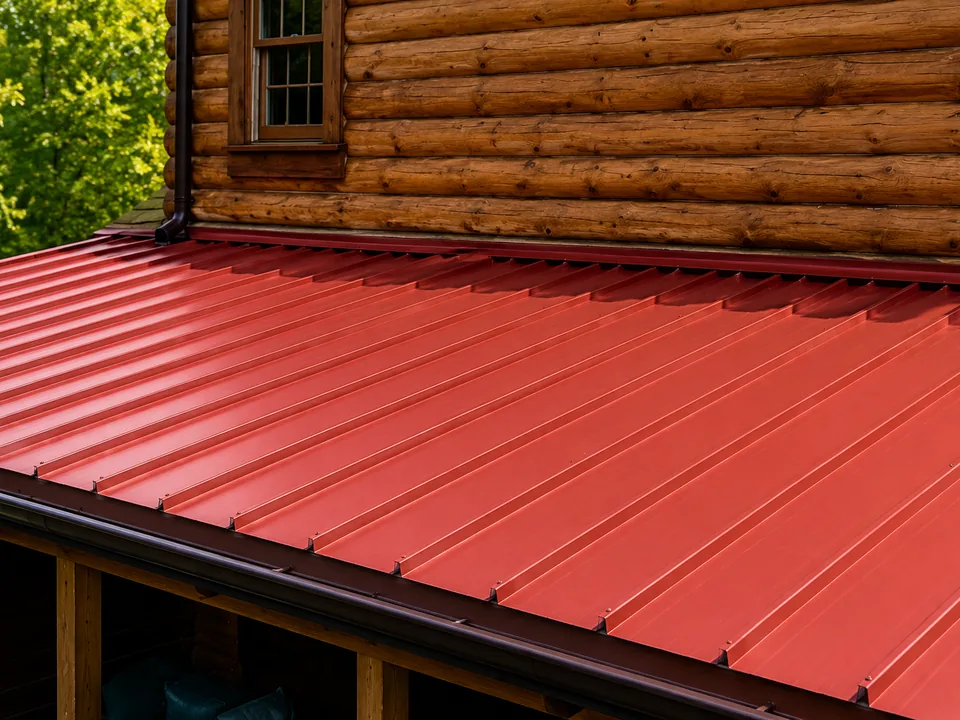 Standing seam metal roofing
Clean lines and hidden fasteners with strong curb appeal.
That one decision changes most of what follows. Fewer holes through the panel means fewer places water can get in, and it moves the attention onto the seams, the clips and the flashings instead.
It also changes how the roof has to be built. Panels are meant to move as temperatures change, so the system has to let them, and the edge details have to work with that movement rather than against it.
The Service
How It Differs From an Exposed-Fastener Roof
On an exposed-fastener roof, screws pass through the panel face and each is sealed by a washer. It is a proven, economical way to fix metal down. What it means in practice is that a large roof carries hundreds or thousands of sealed holes, and washers have a shorter service life than the panels.
Standing seam moves the fixings out of the water path. Clips hold the panel from underneath and the seam covers the joint, so the roof surface has far fewer penetrations by design. The trade is cost and complexity: the panels, the clips and the forming all cost more, and the work is more particular.
Neither is universally correct. An exposed-fastener roof on an outbuilding may be exactly the right answer, and a standing seam roof detailed carelessly will still leak. What changes with the system is where the attention has to go.
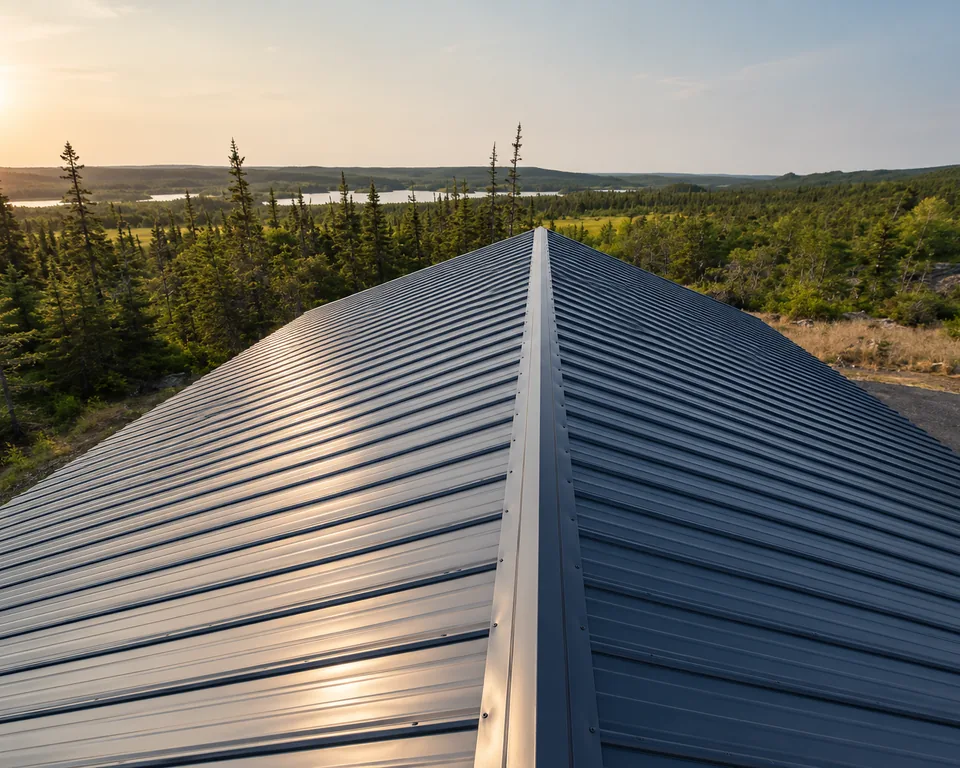 Standing seam metal roofing
When To Act
When Standing Seam Is Worth Considering
It suits some situations better than others. Worth looking at when:
- You want fewer maintenance points on the roof surface over the long term.
- The roof has long uninterrupted runs where panels can go ridge to eave without an end lap.
- The building has lower-slope areas where an exposed-fastener profile is less suitable.
- Appearance matters and the clean seam line is part of the reason for choosing metal.
- The roof is exposed and edge and corner uplift is a real consideration.
- You are replacing a roof and want to correct detailing the previous system handled poorly.
Comparison
Standing Seam and Exposed Fastener, Side by Side
These are common standing-seam system considerations, not descriptions of specific projects completed by Conroe Metal Roof Pros. Neither system is better in the abstract.
| Feature | Standing seam / exposed fastener | Why the difference matters |
|---|---|---|
| Where the fixings sit | Concealed beneath the panel / driven through the panel face | Every fixing through the face is a hole kept watertight by a washer. Concealed fixings take that out of the water path. |
| Maintenance points | Seams, clips and flashings / seams, flashings and every individual fastener | Exposed-fastener roofs have far more items with a shorter service life than the panels. |
| Thermal movement | Panels designed to move on clips / movement restrained at each fastener | Long runs move measurably each day, and restraining that puts stress somewhere else. |
| Slope suitability | Generally suits lower slopes / generally needs more fall | The shallowest plane on the roof sets the constraint, whichever system is chosen. |
| Appearance | Continuous seam lines, no visible fixings / visible fastener rows across the field | A real factor for some buildings and irrelevant for others, but worth deciding deliberately. |
| Repair approach | Work at seams and clips, may need a seam opened / individual fasteners replaced in place | Standing seam repairs are more specialized; exposed-fastener repairs are more straightforward but more frequent. |
| Relative cost | Higher material and labor / lower material and labor | The difference is real up front; the comparison over time depends on the building. |
Panels and Movement
Seams, Clips and Why Panels Need to Move
Metal expands and contracts with temperature every day it is on a building, and a long panel moves more than people expect. A standing seam system is built around that: clips hold the panel down while allowing it to travel, and the seam accommodates the movement without opening.
Which is why clip selection and installation matter more than they look. A clip that is wrong for the panel length, or fitted so the panel cannot move, transfers that load into the seam or the deck attachment instead. It is a slow failure, which is what makes it easy to miss.
Seam profiles vary between systems. Some are snapped together on the roof, others mechanically formed with a seaming tool after the panel is set. They behave differently and are repaired differently, so knowing which is on the building matters before anyone works on it.
Panel width and length feed into all of it. Longer runs move more; wider flat pans show more of what is beneath them. Geometry decides where seams land, and a layout worked out before ordering avoids end laps that become maintenance points.
The Details
What Still Controls Water Entry
Concealed fixings remove one category of risk, not the need to detail the roof properly. The places that leak on a standing seam roof are the places that leak on any metal roof.
Valleys carry the most water and need panels cut and closed correctly at the edge. Ridges need closure that keeps wind-driven rain out while allowing airflow. Eaves, rakes and corners take uplift directly. Roof-to-wall junctions need counter-flashing rather than sealant.
Penetrations catch people out on standing seam. A pipe or curb interrupts a panel designed as a continuous run, and it has to be flashed in a way that still lets the panel move. A rigid detail fixed across a moving panel becomes the thing that fails.
Sealant belongs inside these details, not instead of them. Surface-applied sealant alone is rarely a durable substitute for correcting the underlying seam or flashing detail. Use only sealants and repair methods approved for the specific panel system. It has a much shorter life than the roof, hides what is underneath, and on a system built around movement it tends to be pulled apart by the very thing it was meant to stop.
Appearance
Oil Canning and What It Does and Does Not Mean
Visible waviness across flat areas of metal panels is common enough to have its own name. Oil canning is a characteristic of light-gauge metal in flat, wide surfaces, and it shows more in some lighting, at some angles and on some finishes.
It is often an appearance concern and, by itself, does not prove that the roof has structurally failed. That is worth stating plainly because it worries people, and because it is not a reliable signal on its own.
What is worth looking at is whether distortion is general across the pan or concentrated near a fixing, a seam or a penetration. The second is the one that warrants a closer look. A roof inspection is how that gets judged rather than guessed.
How It Works
Our Process
- Step 1
Review geometry, drainage and the intended system
Roof planes, pitches, panel run lengths, where water leaves, and which standing seam approach is being considered.
- Step 2
Examine deck, slope, penetrations and edges
Deck condition and flatness, measured slope, every penetration and transition, and the edge conditions where uplift concentrates.
- Step 3
Confirm layout, seam approach, clips and movement
Panel layout and seam direction, how panels will be attached, how movement is accommodated, and how each flashing detail is formed.
- Step 4
Carry out the work in the system’s sequence
Installation or corrective work in the order the system requires, since standing seam panels engage along their length and cannot simply be worked on out of order.
- Step 5
Review seams, attachments and details
Seam engagement, clip or attachment condition, flashing, penetrations, edges and the visible finish.
Pathways
New Systems, Repairs and Replacement
Standing seam is not a system that avoids maintenance. It has fewer routine maintenance points than an exposed-fastener roof, which is a real advantage, but seams, clips, flashings and penetrations all still need looking at over the roof’s life.
For a new standing seam roof, metal roof installation covers how the work gets planned and carried out. Where an existing standing seam roof has a fault, metal roof repair covers the corrective side, including why seam and clip work is more specialized than replacing a screw. Where a roof has reached the point where repairs only defer the decision, metal roof replacement covers that, and the metal roof cost guide covers what drives the numbers.
Property Type
Homes and Commercial Buildings
On houses, standing seam is often chosen for the appearance as much as the performance, and the work is shaped by geometry: dormers, valleys, porch tie-ins and varied pitches all add detailing that has to accommodate panel movement.
On commercial buildings, the appeal is usually the long runs and the lower-slope suitability, with rooftop equipment and drainage driving the detailing. Commercial metal roofing covers that side of the work.
Scope
What Affects a Standing Seam Roof
No flat price is published here. Standing seam costs more than an exposed-fastener system up front, and how much more depends on the building. What changes the scope:
For a full breakdown, see our metal roof cost guide for Conroe, TX, then request a metal roof estimate.
- Roof size, and how many separate planes and pitches it has.
- Panel run lengths, and whether end laps can be avoided.
- Seam profile and attachment approach.
- Geometry: valleys, dormers, hips and tie-ins all add detailing.
- Number of penetrations that have to be flashed around a moving panel.
- Access and staging on the particular building.
Request Standing Seam Metal Roofing in Conroe, TX
Tell Conroe Metal Roof Pros about your roof and we will help you plan the next step.
Keep Exploring
Related Metal Roofing Services
Explore the services that pair with this one, or see the full list.
Service Areas
Conroe Metal Roof Pros serves Conroe and nearby Montgomery County areas.
Answers
FAQs About Standing Seam Metal Roofing
Is standing seam better than an exposed-fastener metal roof?
Not universally. Standing seam has fewer holes through the panel surface and fewer maintenance points. Some standing-seam systems are designed for lower slopes than many through-fastened systems; verify the manufacturer’s minimum slope and tested assembly. Exposed-fastener panels cost less and go on faster, and on plenty of buildings they are the right answer. The useful question is which suits the roof in front of you.
What do the clips on a standing seam roof actually do?
They hold the panel down while letting it expand and contract. Long panels move measurably as temperatures change, and the clips are what allow that without the seam opening. A clip that is wrong for the panel length, or fitted so the panel cannot move, pushes that load into the seam or the deck attachment instead.
Are all standing seam systems the same?
No. Seam profiles and attachment methods vary, and the two broad approaches behave differently: some seams are snapped together on the roof, others are mechanically formed with a seaming tool after the panel is set. Knowing which is on a building matters before anyone works on it, because they are not opened or repaired the same way.
Does a standing seam roof still need flashing at penetrations?
Yes, and in a way that still lets the panel move. A rigid detail fixed across a moving panel becomes the point that fails. Concealed fixings remove one category of risk, not the need to detail the roof properly.
Is waviness in the panels a sign of a problem?
Usually not on its own. Oil canning is visible waviness in flat metal panels, and it is often an appearance concern that does not by itself prove the roof has structurally failed. What is worth a closer look is distortion concentrated near a fixing, a seam or a penetration rather than spread evenly across the pan.
Can a standing seam roof be walked on for maintenance?
Not by the property owner. Panels are supported differently from a decked surface, seams can be damaged by weight in the wrong place, and metal is slick. Anything needing a close look is worth having looked at by someone who knows where the system takes load.