
Metal Roofing Services · Conroe, TX
Residential Metal Roofing in Conroe, TX
A metal roof on a house is a system rather than a surface. The panels are the part you see, but what decides how it performs is underneath and around the edges: the deck, the underlayment, the flashing at every junction, and how the whole assembly handles heat and moisture.
- Metal roofing for homes
- Panel colors & profiles
- Energy-efficient finishes
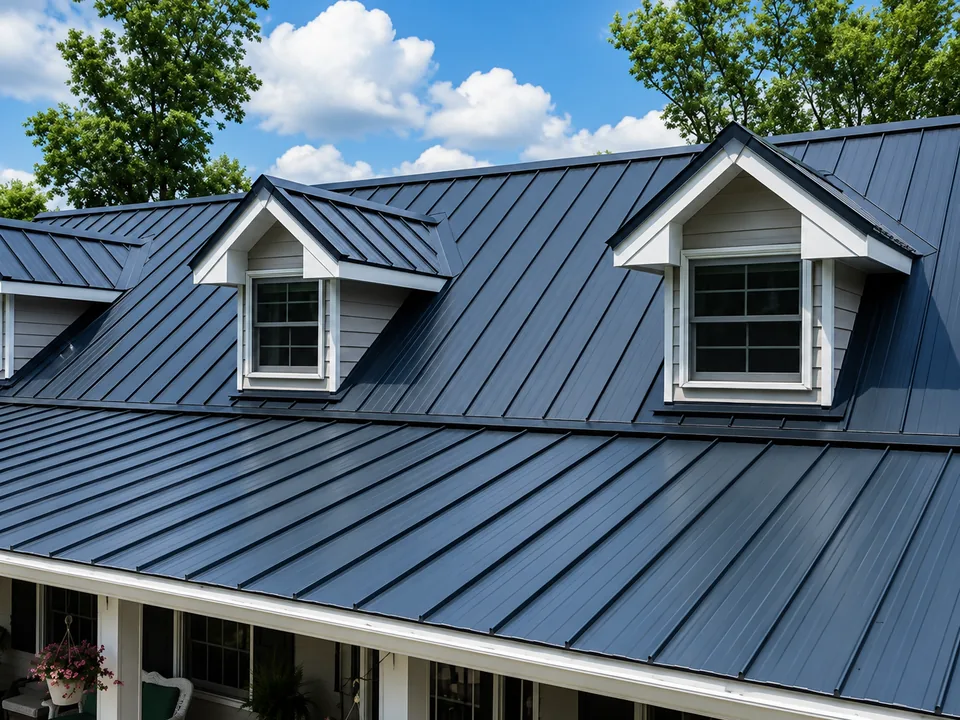 Residential metal roofing
We explain panel and color options in plain terms.
Houses complicate that more than most buildings. A warehouse roof is often two large planes. A house has dormers, valleys, a chimney, porch tie-ins, varied pitches and a skylight or two, and every one of those is a detail somebody has to get right.
Most of those decisions are ones you can be walked through rather than handed. Panel system, profile, color and trim all have trade-offs worth understanding before anything is ordered.
Residential metal roofing in Conroe, TX covers both ends of that. Some houses already carry a roof that has to come off before anything else is decided. Others are new builds or additions where every choice is still open. The two start in different places, and it is worth knowing which one you are in before comparing options.
The Service
Roof Shape Drives Most of the Work
Panel layout follows the geometry of the house. Where panels can run full length from ridge to eave, the roof has fewer joints and fewer things to maintain. Where dormers, valleys or changes of pitch interrupt those runs, the layout has to be worked out so cuts and seams land sensibly rather than wherever they happen to fall.
Valleys take the most water on a house and usually the most attention. Chimneys and roof-to-wall junctions need flashing formed for them rather than sealed over. Skylights sit in the middle of a panel run and interrupt it, so they get treated as their own detail. Porch and addition tie-ins bring two roof planes together at an angle the original builder may not have considered.
None of that makes metal unsuitable for a complicated roof. It means the planning matters more.
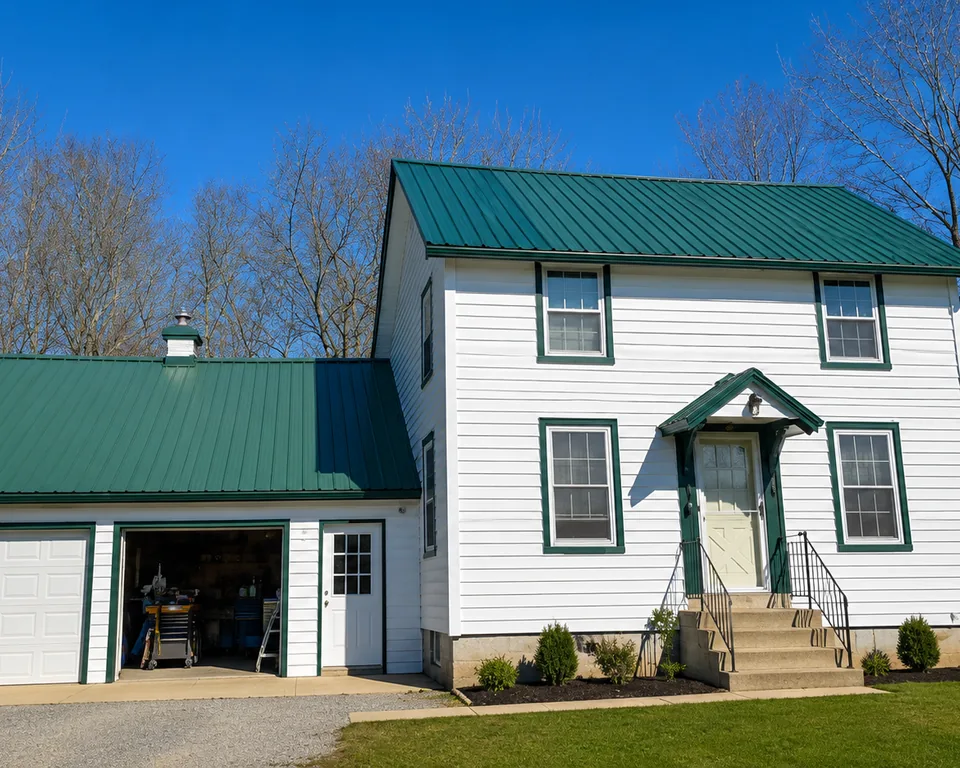 Residential metal roofing
When To Act
When Homeowners Look at Metal
The reasons vary, and they shape which conversation is actually useful:
- The current roof is nearing the end of its life and you want the next one to last longer.
- You are adding to the house and want the new roof to work with what is there.
- A garage, workshop or detached building needs covering and metal suits the use.
- You like the look of standing seam and want to know what it involves.
- The roof has an ongoing problem nobody has resolved properly.
- You are planning solar later and want a roof that will still be sound when it goes on.
Your Roof
What Shapes the Conversation
These are common residential metal-roofing considerations, not descriptions of specific homes or completed projects by Conroe Metal Roof Pros.
| Condition or priority | Why it matters | What should be discussed |
|---|---|---|
| Complex roof shape | Dormers, valleys and pitch changes interrupt panel runs and multiply the detailing | Panel layout, where seams and cuts land, and how much trim the shape needs. |
| Chimney or wall transition | Water coming down a wall above the roof has to be intercepted, not sealed against | How the junction gets flashed, and whether existing flashing is being reused or replaced. |
| Skylight or other penetration | It interrupts a panel run designed to be continuous | How it is flashed, and whether its condition means it should be addressed at the same time. |
| Existing roof covering | What is already there affects whether it comes off and what the deck looks like | Whether removal is planned, and what is known about the deck beneath it. |
| Attic moisture or staining | It may point at a leak, at condensation, or at a ventilation issue rather than the roof | What has been seen, when, and whether the attic can be looked at directly. |
| Appearance preference | Panel profile, width, seam pattern and color change the finished look substantially | Which look you are after, and what each option means for cost and maintenance. |
| Garage or workshop | Simpler geometry and different use often justify a different system from the house | Whether it should match the house or be specified on its own terms. |
| Future additions or solar | Both mean something will be attached to or tied into the roof later | What is planned, so penetrations and layout can account for it now rather than later. |
Choosing
Appearance and Performance Are Both Real Considerations
Caring how the roof looks is not frivolous. It is a large share of what you see from the driveway, and you will be looking at it for a long time.
Panel profile is the biggest visual decision. Standing seam gives continuous vertical lines and no visible fixings across the field. Exposed-fastener panels show regular fastener rows and a ribbed profile, which suits some houses and outbuildings well and costs less. Panel width changes the rhythm of the seam lines, and color changes everything. Standing seam metal roofing covers how the two systems differ mechanically.
The performance side is not separate from the aesthetic one. Wider flat pans show more of whatever is beneath them, which is why deck flatness matters more on some profiles than others. Darker colors absorb more heat than lighter ones. A finish designed to reflect more sunlight can reduce how much heat the roof puts into the space below, though how much difference that makes to a particular house depends on the attic, the insulation and the ventilation as much as the roof.
What to avoid is choosing on appearance alone and finding the maintenance implications later, or choosing on specification alone and disliking the result for twenty years.
The Assembly
Attic, Ventilation and What Sits Under the Panels
A metal roof interacts with the space beneath it, which on a house is usually an attic.
Metal cools quickly at night, and when the panel underside drops below the dew point of the air beneath it, moisture forms there. That produces damp insulation and drips with nothing wrong outside, which is why underlayment and ventilation get considered together at planning stage. Metal roof installation covers how that gets specified.
Adding ventilation is not automatically the answer either. In hot, humid conditions, pulling outside air into an attic can bring moisture with it, and building-science work on this climate has found more ventilation sometimes makes things worse. Anyone who names the fix without looking at your attic is guessing.
Where To Start
Inspection, Repair, Installation or Replacement
Four different conversations, and homeowners often start in the wrong one because the roof is doing something visible.
If something is wrong and nobody has established what, start with a roof inspection, which settles condition before anyone quotes work. If the fault is known and confined, metal roof repair covers it, and one leak does not mean the roof is finished.
If the roof is genuinely at the end of its life, metal roof replacement covers that decision, including whether the old covering comes off. For a new build, an addition or a first metal roof on a detached building, installation is the starting point.
Whichever of the four a residential metal roofing project in Conroe turns out to need, the first step does not change: describe the house, the roof and what you have noticed. That is what makes the conversation about your building rather than about houses in general, and it is also what the scope is built from. What moves that scope is set out on the metal roof cost guide.
How It Works
Our Process
- Step 1
Review the home and what you have noticed
Roof geometry, how the house is used, what prompted the call, and anything you have seen from the ground or inside.
- Step 2
Examine slopes, deck, drainage and the details
Measured slopes, deck condition where visible, drainage paths, attic conditions where accessible, and every penetration and transition on the roof.
- Step 3
Talk through the options
Panel system, layout, appearance, flashing approach, underlayment and how movement is handled, with the trade-offs of each explained rather than assumed.
- Step 4
Carry out the agreed work in sequence
Installation, repair or replacement completed in the order the system requires, working around the fact that people are living there.
- Step 5
Review the finished work
Seams, fasteners, flashing, edges, drainage, penetrations and visible finish checked once the work is complete.
Planning
Where Homeowner Plans Usually Go Wrong
A few recur often enough to be worth naming.
- Choosing a panel system from photographs without seeing what the profile looks like on a roof shaped like yours.
- Assuming a metal roof fixes an attic moisture problem that was never actually about the roof.
- Treating a square-foot price as comparable between two quotes when one includes far more detailing than the other.
- Deciding on replacement because of one persistent leak that nobody has traced properly.
- Leaving a planned addition or solar install out of the conversation, then adding penetrations to a new roof a year later.
Buildings
Houses, Garages, Workshops and Additions
A house and a detached workshop are different problems even on the same property. The house carries the geometry, the appearance decision and the occupied-building constraint. A garage, barn or workshop is usually simpler in shape and larger in span, which shifts the emphasis to panel length, movement and edge fixing, and often justifies a different system.
Additions are their own case, because the new roof has to meet an existing one. That junction is where the detailing concentrates, and it is worth planning rather than resolving on the day. For buildings used commercially rather than domestically, commercial metal roofing covers the different set of constraints.
Scope
What Affects a Residential Roof
No flat price is published here, because a house is priced by its shape rather than its footprint. What changes the scope:
For a full breakdown, see our metal roof cost guide for Conroe, TX, then request a metal roof estimate.
- Roof size, and how many separate planes and pitches it has.
- Geometry: valleys, dormers, hips, porch tie-ins and skylights all add detailing.
- Panel system, profile and finish.
- Whether an existing covering is removed, and what the deck needs.
- Number of penetrations to be flashed around.
- Access and staging on an occupied house.
Request Residential Metal Roofing in Conroe, TX
Tell Conroe Metal Roof Pros about your roof and we will help you plan the next step.
Keep Exploring
Related Metal Roofing Services
Explore the services that pair with this one, or see the full list.
Service Areas
Conroe Metal Roof Pros serves Conroe and nearby Montgomery County areas.
Answers
FAQs About Residential Metal Roofing
Does a metal roof make a house louder when it rains?
Less than people expect. The drumming sound most people picture comes from bare metal over open framing, like a barn or a carport. On a house with a solid deck and underlayment beneath the panels, the assembly dampens a good deal of it. Whether it is noticeably different from your current roof depends on your deck, insulation and ceiling, so it is a fair thing to ask about for your particular house.
How does a complicated roof shape affect a metal roof?
It moves the work from the panels to the details. Dormers, valleys, pitch changes and porch tie-ins interrupt panel runs, so each junction needs flashing formed for it. A complex roof suits metal fine; it simply takes more planning, and a square-footage quote will understate it.
Which panel look suits a house?
That depends on the house and on you. Standing seam gives continuous vertical lines with no visible fixings, which suits contemporary and traditional homes alike but costs more. Exposed-fastener panels show regular fastener rows and a ribbed profile, which many houses and most outbuildings carry well.
Does a metal roof change anything in the attic?
It can, and it is worth discussing rather than assuming. Metal cools quickly at night, and moisture can form on the panel underside, which is why underlayment and ventilation are considered together. Adding ventilation is not automatically the fix either, so an attic worth worrying about is an attic worth looking at.
Is metal roofing suitable for a garage or workshop?
Often it suits them better than the house. Detached buildings usually have simpler geometry and longer uninterrupted runs, which plays to metal’s strengths, and the appearance constraint is lower. Whether it should match the house is worth deciding deliberately rather than by default.
Should I start with an inspection, a repair, or a replacement conversation?
Start with an inspection if something is wrong and nobody has established what. It settles the condition before anyone quotes work. If the fault is already known and confined, a repair is usually the right conversation. Replacement is the discussion when problems repeat across the roof rather than sitting in one place.