
Metal Roofing Services · Conroe, TX
Metal Roof Replacement in Conroe, TX
Replacing a metal roof is a decision about the whole system, not about the worst spot on it. One leak does not settle it. Neither does a dent, or a run of backed-out screws in a single area.
- Tear-off & disposal
- Deck repair where needed
- Durable new system
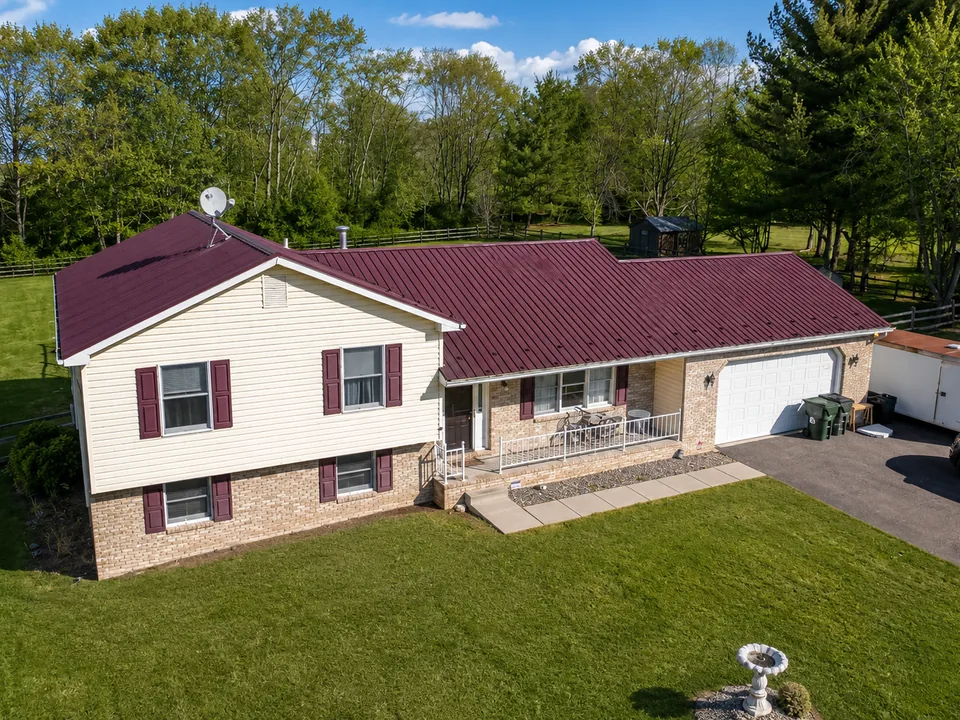 Metal roof replacement
Replacement covers removing the old roof, checking the deck, and installing new metal.
What matters is whether the problems are concentrated or general. A roof with isolated defects may still be repairable when the surrounding system remains sound and compatible. Replacement decisions depend on the extent and distribution of failures, roof and deck condition, corrosion, system compatibility, and the expected value of further repairs.
The honest version of that conversation includes what nobody can see yet. Deck condition under a long-running leak is rarely visible until panels come off, and a plan worth having accounts for that rather than assuming the best case.
The Service
Repair, Monitor, or Replace
Repeated repairs are not automatic proof that a roof is finished. Three separate repairs in three separate places can simply mean three separate details failed, which is what details do as they age. The question is whether each repair addressed a one-off or a symptom of something general.
What tips it toward replacement is pattern rather than count. Fasteners backing out across every slope rather than one. Corrosion that has gone past staining and taken section with it. Seams opening in more than one run. A deck that has been wet long enough to soften. Any of those can shift the recommendation toward replacement, but the correct decision still depends on the roof system, extent of damage and the condition of the surrounding assembly.
Monitoring is a real third answer and gets used less than it should. Some roofs are worth watching for a season with a plan to replace later, which spreads the cost and lets you budget rather than react. If that is the honest read on your roof, it is the one you will get. <a href="/services/metal-roof-repair-conroe-tx/">Metal roof repair</a> covers the work when the answer is repair, and <a href="/services/metal-roof-inspection-conroe-tx/">a roof inspection</a> is how the condition gets established in the first place.
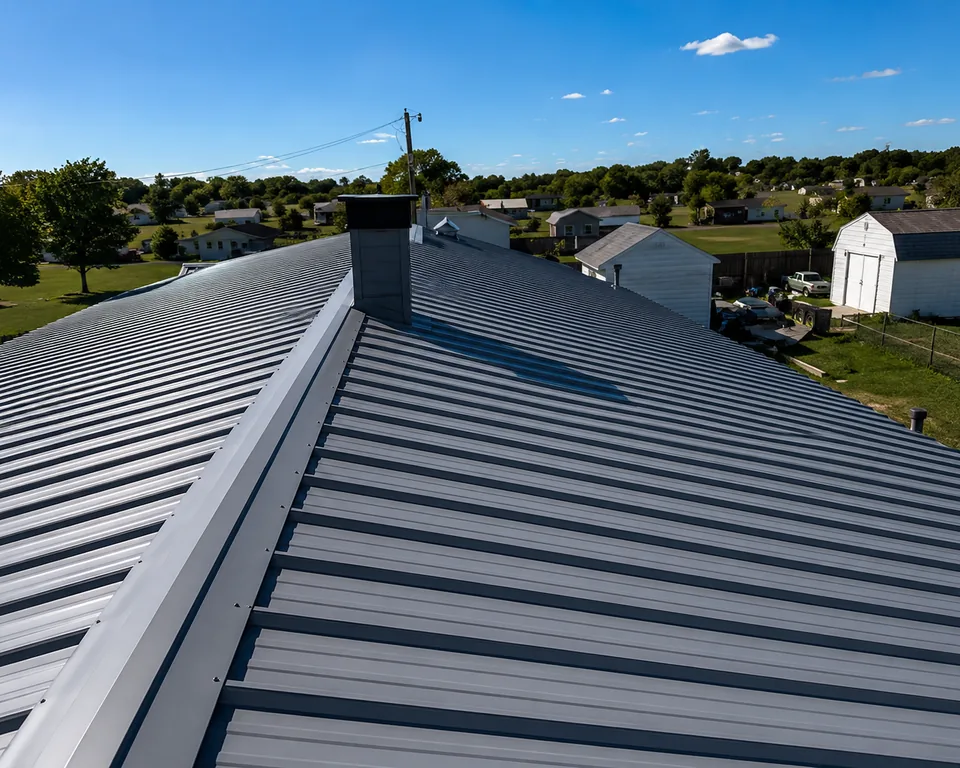 Metal roof replacement
When To Act
Signs Worth a Replacement Evaluation
None of these decides anything on its own. Together they are what tends to move a roof out of the repair conversation:
- The same failure keeps appearing in new places rather than staying put.
- Fasteners are backing out across the roof, not in one area.
- Rust has gone past surface streaking and the metal itself is thinning or perforated.
- Seams have opened in more than one run.
- Leaks have been active long enough that the deck may have been affected.
- Panels are distorted or displaced over a wide area rather than at one edge.
- The roof is old enough that money spent on repairs mostly buys time.
- A building is being reworked and the roof would have to come off anyway.
Existing Conditions
What the Roof Is Telling You
These are common replacement considerations for metal roofs, not descriptions of specific projects completed by Conroe Metal Roof Pros. No single row below settles the decision.
| Existing condition | What it may mean | Why more evaluation is needed |
|---|---|---|
| Leaks returning in new places | The failure may be general rather than a series of unrelated faults | Whether each leak has a separate cause, or one condition is showing up repeatedly. |
| Fasteners backing out across the roof | The fastening pattern may be reaching the end of its service life | Whether it is confined to sun-exposed slopes or happening everywhere. |
| Rust with pitting or perforation | Corrosion has moved past the coating into the metal itself | Surface staining and genuine loss of section are different conditions and are judged separately. |
| Seams opened in several runs | Panels may have been moving in ways the fixings no longer control | Whether the seams can be re-formed, or the movement has a cause that will continue. |
| Ceiling stains that keep returning | Water may have been reaching the deck for some time | How far it has travelled, and what condition the deck is in where it has been landing. |
| Panels distorted over a wide area | Something has loaded the roof beyond one localized event | Whether the distortion is cosmetic waviness or panels that have actually moved. |
| An older roof with repeated repair history | Repairs may be deferring a decision rather than resolving anything | What each repair addressed, and whether the roof has more life worth investing in. |
Removal
Tear-Off, or Over the Existing Roof
A metal roof can sometimes go over what is already there, and sometimes it cannot. It is an evaluation rather than a preference, and getting it wrong is expensive in a way that is hard to reverse.
Going over an existing covering avoids removal and disposal, and keeps the building covered throughout. What it costs you is visibility. Nobody sees the deck, so nobody knows what condition it is in, and any moisture already sitting in the assembly gets closed in rather than dried out or dealt with. Trapping moisture under new metal does not stop it doing damage; it stops you seeing it.
Layer count matters as well. Recovering over multiple existing coverings loads the structure and makes the assembly harder to attach into reliably. What is permitted locally is a question for the authority that issues the permit rather than something to assume from a general rule, and it is worth establishing before a plan is settled.
Tear-off costs more and takes longer. What you get for it is a deck you can actually see, which is the only way to find soft sheathing, previous water damage, or framing that needs attention. On a roof that has been leaking for any length of time, that visibility is usually the reason to do it.
After Removal
What May Turn Up Once Panels Come Off
Nobody can tell you with certainty what the deck looks like under a roof that is still on. Access from the attic side helps, edges and penetrations give partial views, and a long-running leak points at where to look hardest. None of that is the same as seeing it.
What commonly turns up: sheathing that has softened where water has been landing, fastener holes enlarged from years of movement, previous repairs that were covered rather than corrected, and framing that has taken moisture where a leak ran along it before dropping. Sometimes none of it. Sometimes one area.
The honest way to plan for that is to say in advance that deck condition is assessed once it is visible, and that anything found gets discussed before it is worked on rather than after. A quote that assumes a perfect deck is a quote that will change.
The New System
Choosing What Goes Back On
Replacement is a chance to correct what the old roof got wrong, and the details are usually where that sits. Penetrations that were never properly flashed, a valley that has always struggled, an edge that lifts in wind: those are worth resolving in the new layout rather than reproducing.
The system choice follows the building. Slope, geometry, panel runs and how much detailing the roof carries all feed into whether a concealed-fixing or exposed-fastener system suits it. Standing seam metal roofing covers the system comparison, and metal roof installation covers how a new system gets planned and fitted once the decision is made.
What drives the numbers is a separate question, and the metal roof cost guide covers it rather than this page.
How It Works
Our Process
- Step 1
Review the roof’s history
What has been repaired before, where leaks have appeared, how long they have been happening, and what system is currently on the building.
- Step 2
Examine the system and what can be reached
Panels, seams, fasteners, flashing, penetrations, drainage, and whatever deck condition is accessible from inside or at the edges.
- Step 3
Set out repair, monitoring or replacement
What each option would involve, what it would not solve, and what is still unknown until panels come off.
- Step 4
Confirm removal, preparation and the new system
Whether the existing roof comes off or stays, deck preparation, panel layout, fastening approach, underlayment and detailing for the replacement.
- Step 5
Review the installed system
Seams, fasteners, flashing, penetrations, edges and drainage on the finished roof, checked at the details.
Planning
Where Replacement Plans Usually Go Wrong
A few patterns come up often enough to be worth naming.
- Deciding on replacement from the worst area of the roof rather than the overall condition.
- Recovering over an existing roof to avoid removal, without establishing whether moisture is already present.
- Reproducing the detail that caused the original problem because the new roof follows the old layout.
- Treating a quote based on an unseen deck as a fixed number.
- Replacing a roof that had years left because repeated small repairs felt like a pattern.
Property Type
Homes and Commercial Buildings
On houses, replacement is usually triggered by leaks that keep coming back or a roof reaching an age where planning beats reacting. Geometry drives the work, and staging matters because the building stays occupied throughout.
On commercial buildings, low-slope areas, rooftop equipment and drainage tend to decide both the timing and the sequencing, and work often has to be planned around occupancy. Commercial metal roofing covers that side.
Scope
What Affects a Replacement
No flat price is published here, because a replacement is priced by what has to come off and what goes back on. What changes the scope:
For a full breakdown, see our metal roof cost guide for Conroe, TX, then request a metal roof estimate.
- Roof size, number of planes, and how much detailing the geometry carries.
- Whether the existing roof is removed or covered.
- Removal and disposal of the existing system where it comes off.
- Deck condition once visible, and any repair it needs.
- The replacement system and its fastening approach.
- Access, staging, and working around an occupied building.
Request Metal Roof Replacement in Conroe, TX
Tell Conroe Metal Roof Pros about your roof and we will help you plan the next step.
Keep Exploring
Related Metal Roofing Services
Explore the services that pair with this one, or see the full list.
Service Areas
Conroe Metal Roof Pros serves Conroe and nearby Montgomery County areas.
Answers
FAQs About Metal Roof Replacement
Does a leak mean the roof needs replacing?
No. Metal-roof leaks can originate at flashings, penetrations, seams, fasteners or other details. Replacement enters the picture when the same failure keeps appearing across the roof rather than staying in one place.
Do repeated repairs mean it is time to replace?
Not by themselves. Three repairs in three different places can simply be three details reaching the end of their life, which is normal on an older roof. What matters is whether each one addressed a separate fault or the same underlying condition showing up repeatedly.
Can a new metal roof go over the existing one?
Sometimes. It depends on what is already there, how many coverings exist, whether the deck below is sound and dry, and whether existing moisture would be closed in rather than dealt with. What is permitted locally is a question for the permitting authority rather than a general rule, and it is worth settling before planning around it.
What happens if the deck turns out to be damaged?
It gets discussed before it gets worked on. Deck condition under a roof that is still on cannot be established with certainty, so anything found once panels come off is raised, explained and priced separately rather than absorbed silently into the job.
Is tear-off always better than covering the existing roof?
Not always, but it is the option that lets anyone see the deck. On a roof that has been leaking for a while, that visibility is usually the reason to choose it. On a sound, dry, single-covering roof, going over the top can be reasonable.
Can the new roof fix problems the old one had?
Often, and that is worth planning for deliberately. A penetration that was never flashed properly, a valley that always struggled, an edge that lifts in wind: replacement is the point at which those get resolved rather than reproduced in the new layout.